Guides · Records, areas and BUPi
The family land isn't registered: how to find out what is yours
 By Francisco Gomes Pereira, Portuguese solicitor (solicitador) and cadastral technician
November 2026 · 4 min read
"That pine wood by the spring is ours. It always belonged to Grandad." In many families, ownership of land is passed down from generation to generation by word of mouth. Everyone in the village knows whose it is, but no document says so.
Today, with the family spread around the world and the people who know the land passing away, the lack of registration makes proof and regularisation harder. It does not, in itself, mean that the family is not the owner or cannot inherit the land; the title, the succession and the right route to register and transfer it safely have to be established.
Where to look, and what each source proves
A plot of land can appear in three different places, and each says something different.
| Where | What it shows | What it does not prove |
|---|---|---|
| Tax Office (tax register and caderneta predial) | That there is an entry in someone's name, for municipal property tax (IMI) purposes | It does not prove ownership |
| Land Registry (Conservatória do Registo Predial) | Who the registered owner is and any charges on the property | It does not always show the real area or boundaries |
| Cadastre or BUPi | The mapped location and configuration; the cadastre has its own legal effects and the BUPi outline (RGG) may be validated with a geometry reservation | On its own, it does not replace registration |
The most common case in emigrant families is that the land is recorded with the Tax Office, often still in the grandparents' names, but has never been registered at the Land Registry. Paying the property tax for years does not make anyone the owner.
Where to start:
- Gather what the family has: old tax records, deeds, divisions of estates, property tax receipts, letters and plans.
- Check with the Tax Office which entries exist in the name of the deceased or their ancestors.
- Check at the Land Registry whether those entries have a description and registration, and in whose name.
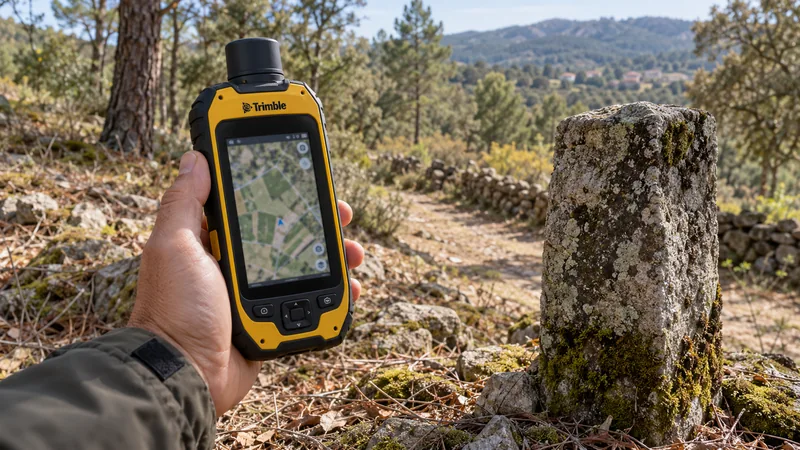
- Check on the ground, and on the cadastre or BUPi map, where each property is and where it ends.
How land is registered for the first time
The route depends mainly on whether there is a document proving the acquisition.
Where there is a title. If there is an old deed, a division of an estate or another valid document, registration can usually be based on it, once the property has been identified.
Where there is no sufficient formal title. You need to establish how the right was acquired and what evidence exists. Depending on the case, a notarial or registry justification (justificação) or a special procedure provided by law may be used. Long possession only allows acquisitive prescription (usucapião) to be claimed when its legal requirements are met; the procedure does not automatically make the applicant the owner.
The property must also be correctly identified. Depending on its location and cadastral status, a georeferenced graphic representation (RGG) in BUPi or the appropriate cadastral documentation may be needed. In transfers covered by the law, the required identification must be complied with, including any applicable exemptions and exceptions.
Why not put it off
- Lack of registration or proper identification can make a sale or division difficult and requires choosing the right legal and technical route.
- The more time passes, the fewer witnesses and documents there are to prove possession.
- Neighbours may identify their land first and, if their boundaries overlap yours, the problem is left to be resolved later.
- The temporary free regime ended on 30 September 2026. Costs depend on the identification channel and the procedure: municipal assistance has its own statutory charges, wholly online identification remains free according to current official information, and private professional fees and registry charges are separate.
We put your family's land in order
At MGPS International this is our everyday work. Our team brings together a Portuguese solicitor (solicitador, a regulated legal profession in Portugal) and a cadastral technician, so we deal with the legal and the technical side at the same time:
- we gather everything that exists at the Tax Office, the Land Registry and the cadastre in the family's name;
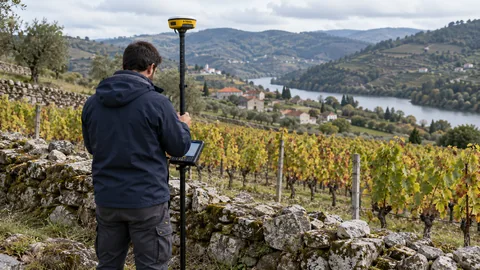
- we verify on the ground the location and boundaries indicated, comparing them with the titles and the information available;
- we carry out the identification in BUPi or the appropriate cadastral procedure;
- we choose the route to registration, with or without a title, and see it through to the end.
Much of this work is done without the heirs having to come to Portugal. When someone's presence is needed, we let you know well in advance and organise everything for a single trip.
You know you have land in Portugal, but not exactly which or where? Use the initial assessment and tell us the parish (freguesia) and what you know. Even with little information, we can make a start.
This article is for general information only and is not legal advice for any specific case.
About the author
Francisco Gomes Pereira
Portuguese solicitor (solicitador) and cadastral technician, MGPS International