Guides · Access and easements
Access, rights of way and easements on rural property in Portugal
 By André Filipe Soares, Trainee lawyer
November 2026 · 3 min read
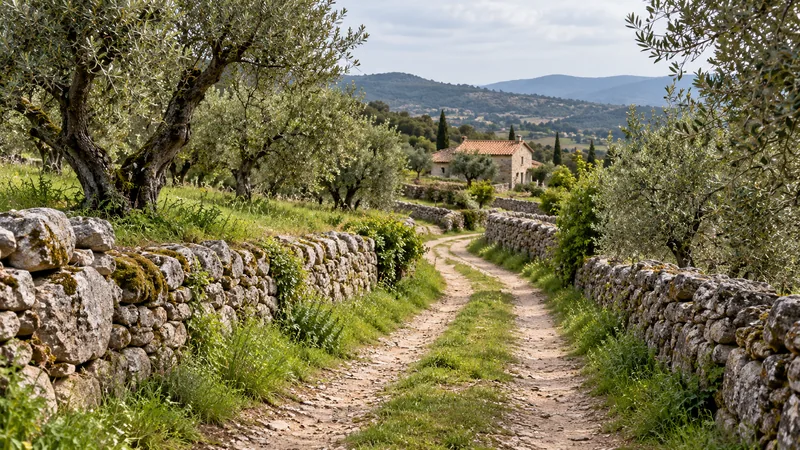
On the viewing, you drove up a dirt track to the house. Everyone uses it, the agent says. Months after you buy, the neighbour who owns the track puts up a gate. Or a farmer starts crossing your new garden to reach his olive grove, because his family has always done so.
In rural Portugal, how you get to a property, and who else has rights over it, is often based on custom rather than documents. Many of these rights are perfectly legal even though they appear in no record. That is why they deserve a check of their own before you buy.
How do you get to the property?
There are three typical situations.
| Situation | What it means | What to check |
|---|---|---|
| Fronts a public road | The boundary may adjoin a public road, but the permitted entrance and suitability of access still need checking | That the road is genuinely public, and its width if you plan building works |
| Reached by a private track | You cross someone else’s land to get there | Whether a formal right of way exists, how it was created and whether it allows vehicles |
| Landlocked | No direct link to a public road | Whether a right of way exists or can be claimed, and on what terms |
Owners of landlocked or insufficiently connected plots may, subject to the legal requirements and exceptions, demand a right of way over neighbouring rustic land, with compensation where applicable. The route and extent are not freely chosen by the buyer. Establishing the right after purchase may require agreement or proceedings, so the issue should be investigated beforehand.
Long use can be relevant to an easement acquired by prescription, but custom or a visible track alone does not establish the right. An easement must meet the applicable legal requirements; acquisition by prescription requires an apparent easement, revealed by visible and permanent signs. The use may instead have been merely tolerated. Its origin, scope and proof need to be assessed.
Rights others may have over your land
The land you buy may also carry rights in favour of others. The most common are:
- rights of way for neighbours to reach their own plots;
- water rights: channels crossing the land, or a neighbour’s right to water from a spring or well;
- utility easements for power lines, pipes or other infrastructure;
- administrative easements and public-law restrictions near roads, rivers or infrastructure, which must be distinguished from private rights of way.
These do not usually stop a purchase. But they can affect where you build, whether you can fence the land and how private it will really be.
How to check, and how to fix it before you buy
- Read the Land Registry entry, which shows any easement that has been registered. Many are not.
- Walk the land, looking for paths, gates, channels, poles and signs of use by others.
- Talk to the neighbours, who often know far more than the documents.
- Check the maps: the cadastre or BUPi outline, and what the municipality shows about roads and restrictions.
- Formalise what matters before completion. If your access depends on a neighbour, or a neighbour’s right affects your plans, agree it in writing and register it, ideally as a condition in the promissory contract.
Know how you get in, and who else does
Access and easements are where paperwork and land meet, and where a document-only check falls short. At MGPS International, our team brings together a solicitor and a cadastral technician, so we check both.
We will:
- assess the legal basis, scope and practical suitability of access, including vehicle use and the proposed works;
- investigate registered easements and signs of possible unregistered rights, identifying matters that need further evidence;
- negotiate and formalise rights of way or other agreements with neighbours;
- build all of it into your promissory contract and register it at completion.
Unsure about the access to a property you like? Request a property check. Send us the listing and, if you have them, photos of the track or the plot. We’ll tell you what needs checking and quote a fixed fee.
This article is for general information only and is not legal advice for any specific case.