Guides · Inheritance
Inheriting property in Portugal as a foreign heir
 By André Filipe Soares, Trainee lawyer
November 2026 · 4 min read
Your parents retired to the Algarve. A relative left you a share of a family house in the Minho. Or you have just learned that you are an heir to land in Portugal you have never seen. Whatever the story, you now have a Portuguese inheritance to deal with, in a system and a language you don’t know.
Which law applies?
The applicable law is not always Portuguese. For deaths on or after 17 August 2015, the EU Succession Regulation generally points to the deceased’s habitual residence at death, subject to exceptions and any valid choice of a nationality’s law in a disposition upon death. It can designate a non-EU law, including where the deceased lived outside the EU.
A British retiree habitually resident in Portugal and an American resident in the US therefore need separate analysis. A non-EU connection can also require consideration of renvoi and the treatment of foreign succession documents. The heirs’ own residence does not, by itself, determine the law governing the estate.
The first steps in Portugal
Report the death to the Tax Office. When someone dies leaving assets in Portugal, the death and a list of the assets must be reported to the Portuguese Tax Office by the end of the third month after the month of death. This is the duty of the person administering the estate (the cabeça-de-casal), normally the surviving spouse or one of the heirs. Late filing can lead to fines.
Stamp duty. Portugal taxes certain inheritances through stamp duty, generally at 10% for taxable Portuguese assets. The spouse or qualifying unmarried partner, descendants and ascendants are exempt from that charge, but the required tax report must still be made. Tax obligations in another country should be checked separately.
Tax numbers. Heirs need the Portuguese tax identification required for the relevant procedures. For residents outside the relevant EU/EEA area, a Portuguese tax relationship may require a tax representative or an accepted electronic notification service, with special rules for activities subject to VAT.
Foreign documents. Legalisation and translation requirements depend on the document and its country of issue. Certain EU public documents, including birth, marriage and death certificates within Regulation 2016/1191, do not need an apostille; multilingual forms and other exemptions may also remove the need for translation.
Proving who the heirs are
A Portuguese declaration of heirs (habilitação de herdeiros), a European Certificate of Succession or another admissible succession title may be needed. For a Portuguese habilitação, the estate administrator can declare, or three persons considered credible by the competent authority can do so. The three-person route excludes, among others, relatives who could legally succeed the heirs and spouses of the heirs.
An attorney can prepare and initiate the Portuguese procedure, but this does not replace the personal declarations required for the habilitação. Check who must attend and which route is appropriate. The European Certificate of Succession has automatic effects in participating states; Denmark and Ireland do not participate, and the UK does not apply this regime.
Then: keep, sell or divide
Once the heirs are established and the assets identified, you can decide what to do with the property.
| Option | What it involves |
|---|---|
| Keep it together | The heirs hold shares in the undivided estate; this does not itself give each heir a separate co-ownership share in every individual asset. Costs and administration need to be organised |
| Divide it | An agreement between the heirs on who keeps what, signed and registered |
| Sell it | The persons whose participation is legally required, or their authorised representatives, sign. Portuguese law can dispense with intermediate registration in the names of the heirs of an undivided estate |
The last two can be signed through a power of attorney, so heirs abroad can usually complete them without travelling.
One firm for the whole inheritance
At MGPS International we handle Portuguese inheritances for heirs in the US, Canada, the UK and across Europe, in English and in French. We take care of the Tax Office report, the declaration of heirs, the property records and, finally, the division or sale.
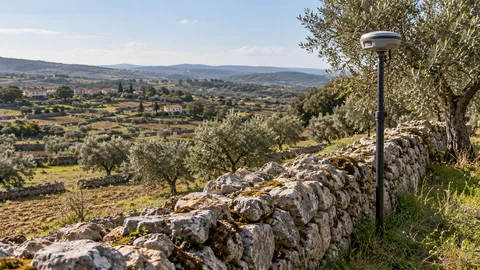
Because our team brings together a solicitor and a cadastral technician, who is also a qualified BUPi technician, we also make sure the properties are correctly identified and recorded. That matters especially for rural land, which often turns out to be different from what the family thought.
Have you inherited property in Portugal? Book a call and tell us what you know. We’ll explain the steps, the deadlines that apply and what it will cost.
This article is for general information only and is not legal advice for any specific case.