Guides · Gifts
Giving property in Portugal to children who live abroad
 By André Filipe Soares, Trainee lawyer
November 2026 · 3 min read
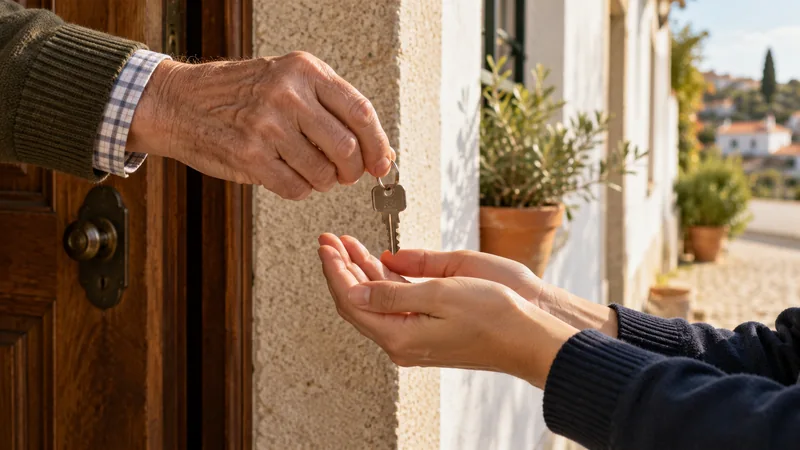
Many emigrant parents, now retired, ask the same question: "Wouldn't it be better to put the house and the land in the children's names now?" They have seen at first hand what happens to inheritances that get stuck, and they don't want to leave the same problem to their children, who live in France, Switzerland or Canada.
A lifetime gift can be a good solution. But it is not a decision to take lightly: once made, it generally cannot be undone. In this guide we explain what to weigh up and how it all works when the children live abroad.
What to weigh up before giving
Continuing to use the house: reserving a usufruct. The parents can reserve the right to use the house or receive the rent (a life interest, known in Portugal as usufruto). If the usufruct is reserved for both parents, the protection of the survivor and the intended duration should be stated expressly, rather than assuming that any clause will have the same effect.
Fairness between the children. Gifts to descendants may be subject to collation (colação), meaning they are taken into account when those descendants inherit under the law. A waiver of collation does not rule out the possible reduction of a gift that encroaches on the reserved share of the forced heirs. The effect also depends on the law that governs the succession.
Taxes. A gift to children benefits from the exemption from the 10% rate under item 1.2 of the stamp duty table (imposto do selo), but the transfer of ownership rights over property is generally subject to 0.8% under item 1.1. If only the bare ownership is transferred, the taxable value of that right has to be calculated. The child may also have obligations in the country where they live.
The condition of the properties. The donor's right must be proven, the properties identified and their registry position checked. For rural and mixed land, the identification through the BUPi outline (RGG), or the cadastral status and any exemptions applicable to the act, must be confirmed.
How it works when the children live abroad
- Diagnosis: we look at which properties exist, what condition they are in and the best way to make the gift, taking all the children into account.
- Regularisation: if needed, we correct registrations, areas and the identification of the land before the gift.
- Tax numbers and powers of attorney: each child needs a Portuguese tax number (NIF). Acceptance can generally be made through an attorney. If the donor is also represented, the power of attorney must identify the recipient and the subject of the gift, comply with the required form and provide for any dual representation or self-dealing. Legalisation and translation are confirmed for each document.
- The deed of gift: it is made by public deed (escritura pública) or authenticated private document (documento particular autenticado). In the latter case, the authentication and electronic filing requirements are met; the same person cannot act as attorney and carry out the authentication in the same act.
- Taxes and registration: we handle the Tax Office report and the registration of the properties in the children's names.
The parents can sign in Portugal during one of their visits, and the children are represented. That way, nobody needs to make a trip just for this.
Planning today to protect the family tomorrow
At MGPS International we help parents and children decide calmly and do things properly. We explain the alternatives, a gift with or without a usufruct, or even keeping the assets and preparing the inheritance, and the consequences of each for all the children.
Because our team combines legal and technical analysis, we put the properties in order before they change hands, so that the children receive properties with no outstanding problems.
Thinking of passing your property on to your children? Use the initial assessment or book a video call. We will look at your situation and explain the options, with no obligation.
This article is for general information only and is not legal advice for any specific case.