Guides · Selling
Selling your parents' house in Portugal without leaving the country where you live
 By André Filipe Soares, Trainee lawyer
November 2026 · 4 min read
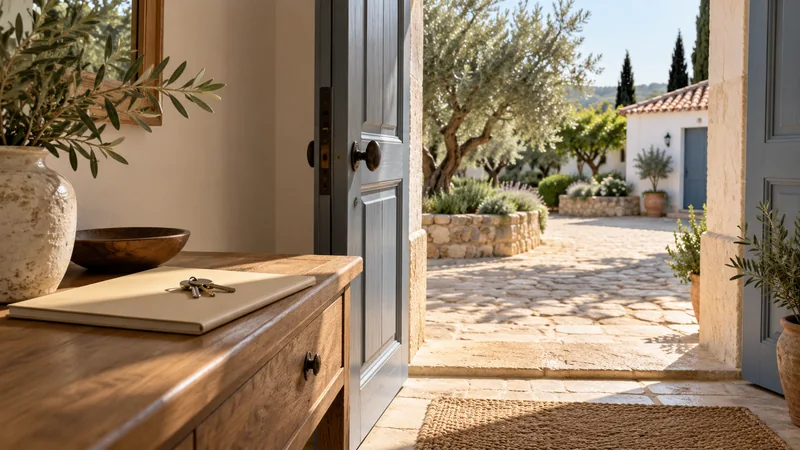
The house you grew up in has been closed up for years. You and your siblings live in different countries, nobody is going back to live there, and the municipal property tax (IMI) bill keeps arriving. The family finally decides to sell.
It is a hard decision, but often the right one. The problem is that many sales fall through, or are delayed for months, not for lack of a buyer but because the house is not ready to be sold. In this guide we explain what has to be sorted out first, how the sale works and what can be done without travelling.
Before putting the house on the market
The succession must be established. The tax obligations must be met and the heirs identified through the Portuguese declaration of heirs (habilitação de herdeiros) or another admissible document. The law allows intermediate registration in the names of the holders of assets in an undivided estate to be dispensed with: it is not always necessary to register the property separately in the heirs' names before registering the sale. The registry position and the chain of title are checked case by case.
The documentary and planning position should be compared with what actually exists on site. It is common to find:
- annexes, garages or extensions that were never declared or licensed;
- areas in the property tax record (caderneta predial) that differ from the real ones;
- the garden or an adjoining plot recorded as a separate property;
- properties still in the grandparents' names.
The documents needed for the sale and for checking the property should be gathered. It is important to distinguish documents used for analysis from those legally required at completion:
| Document | What it is for |
|---|---|
| Permanent Land Registry certificate (certidão permanente) | Proves who the owner is and whether there are any charges |
| Property tax record (caderneta predial) | Identifies the property with the Tax Office |
| Use permit (autorização de utilização) or relevant municipal records, where they exist | Allow the planning position to be checked; producing them at the transfer stopped being a general requirement in 2024, but that does not legalise unauthorised works |
| Energy certificate | Generally required to advertise and sell, unless a statutory exclusion is duly shown |
| Housing technical file (ficha técnica da habitação), if there is one | Useful for knowing the property's features; producing it at the transfer is no longer compulsory |
For apartments in a condominium, the condominium's statement on charges and debts should also be checked, or the buyer's express waiver, with the effects provided by law. Dealing with these items before finding a buyer reduces the risk of delays and of committing to a sale without knowing the property's position.
The sale, step by step
- Agreement between the heirs. Everyone has to agree to the sale and the minimum price. If one heir does not want to sell, there are alternatives, such as the others buying their share or, as a last resort, inventory proceedings (inventário).
- Powers of attorney. Heirs living abroad can sign powers of attorney with the necessary powers. Authority to receive the price is only included if wanted, and on the agreed terms.
- Marketing. Once the house has been regularised, it can be put on the market, usually through a local estate agent.
- Promissory contract, if used. The contrato-promessa is common but not compulsory. The deposit (sinal), the conditions and the deadline for completion should be clearly set out.
- Public deed or authenticated private document. The final sale (escritura or documento particular autenticado) is signed by the heirs or their attorneys, followed by registration in the buyer's name.
- Distributing the proceeds. This should take into account the surviving spouse's share (meação), the heirs' shares, debts and applicable costs, before the net amount is distributed.
What about taxes? The sale of an inherited property may give rise to a capital gain, to be declared for Portuguese personal income tax (IRS). Heirs living abroad may also have to report the sale in the country where they live; in the United States and Canada, for example, residents are generally taxed on their worldwide income. The rules depend on the property's value at the date of the inheritance, the sale price and each heir's tax position, so they should be looked at before the price is agreed.
Selling without travelling, with everything in order
At MGPS International we handle the sale of inherited houses from start to finish, for families living outside Portugal:
- we put the inheritance in order, including preparing and following through the habilitação;
- we regularise the house and the land, because our team combines legal and technical analysis;
- we prepare the powers of attorney for all the heirs;
- we work with the estate agent, review the promissory contract and handle the sale and registration;
- we represent the heirs at completion, if they wish.
For the habilitação, it has to be confirmed who will make the personal declarations and whether they are legally qualified to do so. The preparation can be done by an attorney; the later steps generally allow representation with suitable powers.
Thinking of selling the family house? Use the initial assessment and tell us where the house is and where the inheritance stands. We will tell you what is missing for the house to be ready to sell and what it will cost.
This article is for general information only and is not legal advice for any specific case.